Saturday, 31st January, 2026, David Daly

Tragic Mine Collapse in the Democratic Republic of the Congo
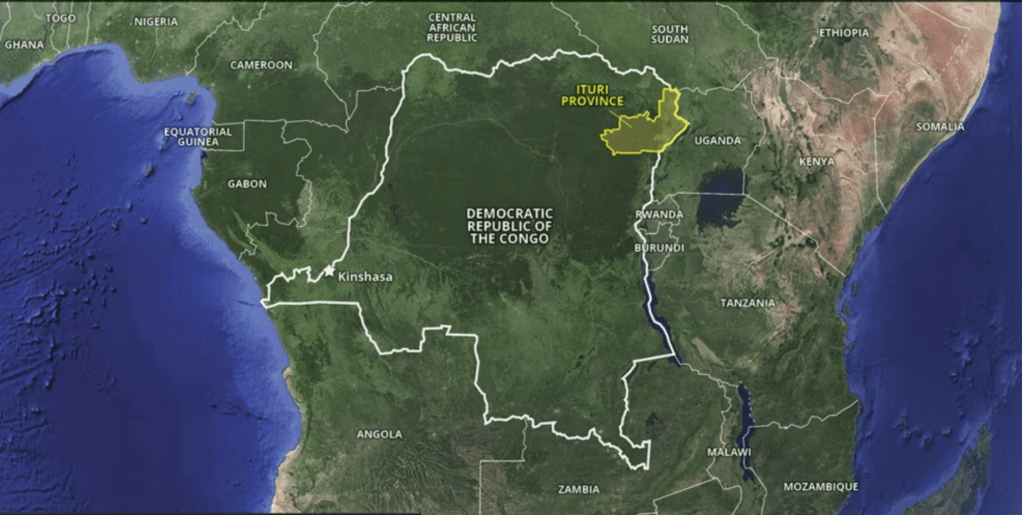
More than 200 people have been killed in a catastrophic collapse at the Rubaya coltan mine in eastern Democratic Republic of the Congo, following days of heavy rainfall. According to reports from the BBC and The Guardian, the mine is one of the world’s key sources of coltan—a mineral used to produce tantalum, an essential component in mobile phones and other electronics.
Officials and rescue workers described chaotic scenes as miners were trapped underground when the earth gave way early Wednesday. Local authorities have launched an emergency response, but access to the remote mine remains difficult due to flooding and poor infrastructure.
The site accounts for around 15% of the world’s coltan supply, and analysts warned that disruptions could temporarily impact the global electronics supply chain. The tragedy has reignited debate over unsafe mining conditions and the ties between the DRC’s mining economy and global tech consumption.
Middle East: Intensification in Gaza and Regional Tensions
In Gaza, Israeli airstrikes killed at least 29 Palestinians, including several children, as reported by Al Jazeera and Reuters. The strikes came amid rising regional tensions, with Israel vowing continued operations against Hamas targets. Witnesses described “a night of relentless bombardment,” particularly across Gaza City and Rafah.
Humanitarian agencies are warning of worsening conditions, with electricity limited to a few hours per day and medical supplies nearly depleted.
Meanwhile, Israel’s purchase of $6.6 billion in U.S. attack helicopters and assault vehicles was approved by Washington, a move seen by some analysts as a signal of long-term strategic alignment between the two countries.
In neighboring Iran, President Masoud Pezeshkian accused former U.S. President Donald Trump, Israeli Prime Minister Benjamin Netanyahu, and the EU of “stirring tensions” during Iran’s recent protests. As reported by Al Jazeera, Pezeshkian’s comments suggest Tehran believes foreign powers played a role in domestic unrest that has swept several Iranian cities this month.
Separately, an explosion at Iran’s southern port of Bandar Abbas late Thursday evening rattled the region, though Iranian media have downplayed links to foreign attacks.
South Africa Expels Israeli Diplomat
Tensions between Israel and South Africa escalated sharply when Pretoria expelled a top Israeli diplomat accused of making “insulting attacks” on President Cyril Ramaphosa, according to The Guardian. The South African government confirmed the diplomat was declared persona non grata following public remarks criticizing the country’s stance on the Gaza war.
South Africa has been one of Israel’s most vocal critics at international forums, including the International Court of Justice, where it has accused Israel of committing genocide against Palestinians. The decision has been lauded by pro-Palestinian activists but condemned by Israel’s foreign ministry as “a hostile and misguided act.”
South Asia: Political Proposals and Looming Restrictions
In India, a key political ally of Prime Minister Narendra Modi proposed a bill to ban teenagers from using social media, sparking national and international debate. As reported by Reuters, the proposed legislation would restrict social media access to individuals over 18, citing concerns about mental health, misinformation, and online addiction among youth.
The plan has drawn both praise from parent groups and strong criticism from digital rights activists, who argue it could set a dangerous precedent for online censorship in the world’s largest democracy. The bill comes amid India’s growing scrutiny of Meta, YouTube, and X (formerly Twitter) over content moderation and data privacy issues.
Pakistan: Military Tensions Force Thousands to Flee
In northwestern Pakistan, mosques warned communities of possible military action, prompting thousands of residents to flee their homes, Reuters reported. The warning followed a series of coordinated attacks by suspected separatist militants, which killed at least 10 policemen earlier this week.
Authorities are preparing for potential armed operations in the Khyber Pakhtunkhwa region, near the Afghan border, raising fears of renewed violence in a region already unsettled by factional fighting.
Cuba and the U.S.: Economic Strain Escalates
Tensions are also rising in the Caribbean. Cuba’s government has condemned new U.S. measures led by Donald Trump, calling them “fascist and criminal”, after the former president indicated plans to impose tariffs on countries that sell oil to Cuba.
As reported by Al Jazeera, the island nation faces one of its worst fuel crises in decades, with only 15–20 days of supply remaining and some areas enduring 12-hour daily blackouts. Cuban officials say the proposed tariffs could trigger a humanitarian crisis, cutting off crucial oil imports from allies like Venezuela and Mexico.
Venezuela’s Political Shift: Amnesty and Investment
In Venezuela, acting President Delcy Rodríguez announced a mass amnesty plan for political prisoners dating back to the Chávez era. The move, reported by The Guardian and Al Jazeera, is part of a broader push for national reconciliation and comes alongside a new bill allowing foreign investment into Venezuela’s oil sector following years of U.S. sanctions.
Observers note that this combination of gestures—domestic leniency paired with economic reform—could signal Caracas’ bid to normalize relations with Western governments while attracting foreign capital.
Global Economy: The UN Faces a Financial Crisis
UN Secretary-General António Guterres has warned that the United Nations faces an “imminent financial collapse”, according to Reuters. Cash flow shortfalls are now threatening key humanitarian and peacekeeping operations worldwide.
Guterres blamed a combination of delayed member-state contributions, budget cuts, and geopolitical paralysis within the Security Council, noting that “the UN’s financial integrity is under stress like never before.”
Diplomats are calling for emergency measures and possible restructuring of dues to keep vital missions functioning in conflict zones.
United States: Partial Government Shutdown Begins
A brief U.S. government shutdown began overnight after Congress failed to meet Friday’s budget deadline, Al Jazeera and NBC News report. The lapse in funding is expected to last only days, with a stopgap spending bill under negotiation. Essential services, including the military and air traffic control, remain operational, but many federal employees have been placed on temporary furloughs.
The shutdown comes amid sharp partisan divisions over domestic spending, immigration policy, and foreign aid to Ukraine and Israel.
Ukraine and Europe: Strikes and Energy Shortages
In Ukraine, a Russian strike on a civilian train in Kharkiv killed five people, according to Reuters. President Volodymyr Zelensky condemned the attack as a “deliberate act of terror.”
Meanwhile, Moldova suffered widespread power cuts linked to grid instabilities in Ukraine’s war-damaged energy network. The outages coincided with cold winter temperatures, leaving thousands temporarily without heat.
In the European political arena, Britain’s Prime Minister Keir Starmer defended post-Brexit trade outreach to China, countering criticism from Donald Trump, who deemed it “dangerous.” Starmer argued it would be “foolish” for the UK to isolate China given global supply chain realities.
Asia-Pacific: Disasters and Climate Events
In the Philippines, at least 18 people were killed in a ferry disaster off Basilan Island, while hundreds were rescued after a vessel caught fire during a major storm, CNN confirmed.
Elsewhere in Asia, South Korea’s former first lady Kim Keon Hee was convicted on corruption charges linked to luxury spending, a case that has shaken the presidency of Yoon Suk Yeol.
In Tunisia, a new prototype solar-powered compact car is garnering attention for spearheading a quiet green revolution in North Africa, offering hope amid worsening climate crises.
Sports and Culture
In sports, Elena Rybakina stunned Aryna Sabalenka to win the Australian Open women’s singles final, as covered by Al Jazeera. Her victory marks a major comeback and continues Kazakhstan’s rise in international tennis.
Meanwhile, in the arts, Saudi Arabia and Egypt have announced a joint initiative to restore major archaeological sites, signaling cultural cooperation amid shifting regional alliances.
 The Coverage
Leave a comment